Home comfort guide
AC repair and maintenance should begin before your split AC stops cooling properly. When it begins taking longer to cool, drips water indoors, or makes a sound that was not there last season, it is tempting to wait it out. That is usually how a small maintenance job turns into an inconvenient repair on the hottest day of the year. Sensible care is less about doing everything yourself and more about noticing changes early, keeping the easy parts clean, and knowing when a qualified technician should take over.
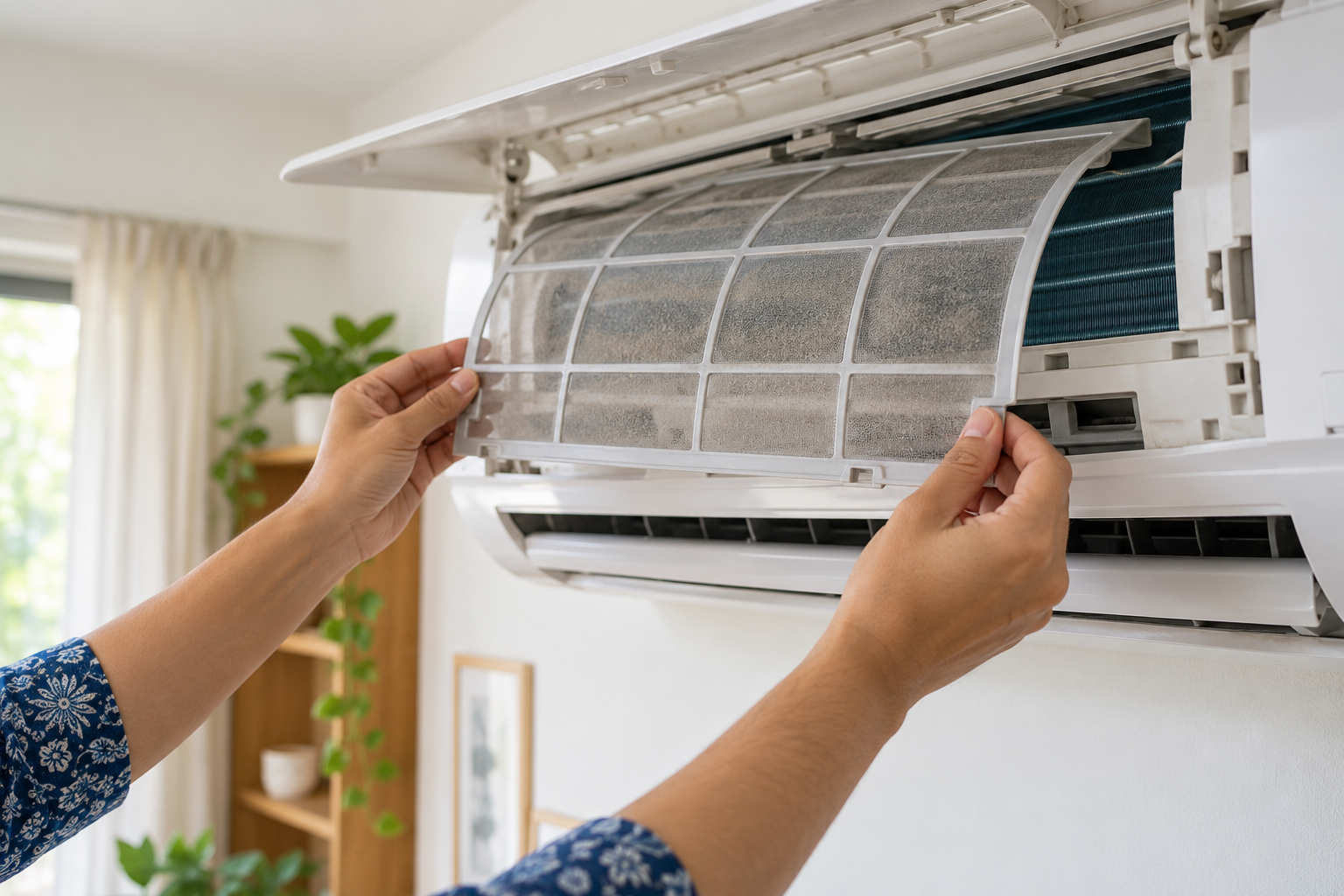
When an air conditioner stops cooling well, it is tempting to wait for a complete failure before doing anything. In practice, that is usually the expensive route. A weak airflow, an unfamiliar rattle, a musty smell, or water below the indoor unit can be the system’s early way of asking for attention. Regular AC repair and maintenance gives those small signals a chance to be found while the fix is still straightforward.
That does not mean every homeowner needs to become an AC technician. A few simple tasks are safe and useful; electrical work, refrigerant handling, deep coil cleaning, and fault diagnosis are not. The sensible goal is to keep the unit clean, notice changes early, and call a qualified professional when a job crosses that line.
Why AC Repair and Maintenance Matters
A split AC moves heat from indoors to outdoors. For that process to work well, air must pass freely through the indoor filter and coil, condensate must drain away, and the outdoor unit needs room to release heat. Dust, blocked drainage, damaged wiring, worn components, and refrigerant leaks all make the system work harder than it should.
Maintenance is therefore about more than a cosmetic wash. A proper visit can help identify restricted airflow, check the condensate path, inspect connections and controls, and evaluate cooling performance. The U.S. government’s ENERGY STAR maintenance checklist similarly recommends annual pre-season check-ups and includes coil cleaning, refrigerant-level checks, blower inspection, and condensate-drain inspection among the professional tasks.
A useful rule of thumb: clean filters and clear the space around the unit yourself; leave refrigerant, electrical connections, and internal repairs to a trained technician.
When to Book AC Repair and Maintenance
No two AC problems sound exactly alike, but these patterns are worth taking seriously. They can help you explain the problem clearly when you book service.
1. Cooling is slow or uneven
If the AC runs for a long time but the room stays warm, start with the filter. A dirty filter limits airflow and makes the unit work harder. If the filter is clean and cooling is still poor, the cause may be a dirty coil, a fan issue, a sensor problem, or a refrigerant leak. That is the point to arrange professional diagnosis rather than repeatedly changing the temperature setting.
2. Airflow feels weak
Weak air at the vents is often linked to dust in the filter or indoor coil. Do not poke a sharp object into the delicate fins. Clean the filter according to the manufacturer’s instructions, then see whether airflow improves. If it does not, a service visit is worthwhile.
3. There is water dripping indoors
Condensation is normal; water finding its way into the room is not. A clogged drain line or tray is a common reason, though poor installation, insulation damage, or a frozen coil can also be involved. Switch the unit off if water is reaching a wall socket, extension board, or other electrical point, and get help promptly.
4. New smells or noises appear
A faint sound from the fan is expected. Grinding, banging, repeated clicking, or a sharp burning smell is not. Mustiness can point to moisture and dirt around the indoor unit, while a burning smell calls for the AC to be switched off and inspected. Do not try to mask these warnings with room freshener and carry on.
5. The unit short-cycles
Short-cycling means the AC starts and stops more often than usual without properly cooling the space. Thermostat settings, restricted airflow, electrical faults, or an incorrectly sized system can all play a part. Because repeated cycling adds strain, it is best assessed by a professional.
6. Your electricity use rises without an obvious reason
A higher bill can have several explanations, including weather and longer usage. But if your habits have not changed and the AC seems to run constantly, a dirty filter, blocked coil, poor airflow, or failing component may be contributing. A maintenance check can separate normal seasonal use from a performance problem.

AC Repair and Maintenance Tasks You Can Safely Do
Small, consistent habits make a real difference. Always turn the unit off at the remote and isolator as directed by the manufacturer before removing a filter or wiping accessible surfaces.
Check and clean the filters
In heavy-use months, inspect filters roughly once a month. If the manual permits washing, rinse them gently, let them dry completely, and refit them correctly. Never operate the AC for extended periods without its filters. A clean filter supports better airflow and keeps dust from accumulating deeper inside the unit.
Keep the outdoor unit clear
Leaves, dust, storage boxes, and tightly packed balcony plants can restrict air around the condenser. Keep the area around it open. Avoid blasting the unit with a pressure washer or bending its fins; an outdoor condenser is sturdy, but its components still need careful handling.
Use the thermostat thoughtfully
Setting an extremely low temperature does not cool the room instantly. It simply asks the system to run longer. Choose a comfortable, realistic setting, close doors and windows while cooling, and use curtains or blinds to reduce direct sun. Ceiling fans can improve comfort by moving air, allowing the thermostat to be set a little higher for some households.
Notice the drainage
Look for unusual dripping from the indoor unit, staining near the wall, or persistent dampness. Do not pour chemicals into the system or dismantle the drain line without knowing the model and setup. These are useful observations to pass on to the technician.
Professional AC Repair and Maintenance: What Service Should Cover
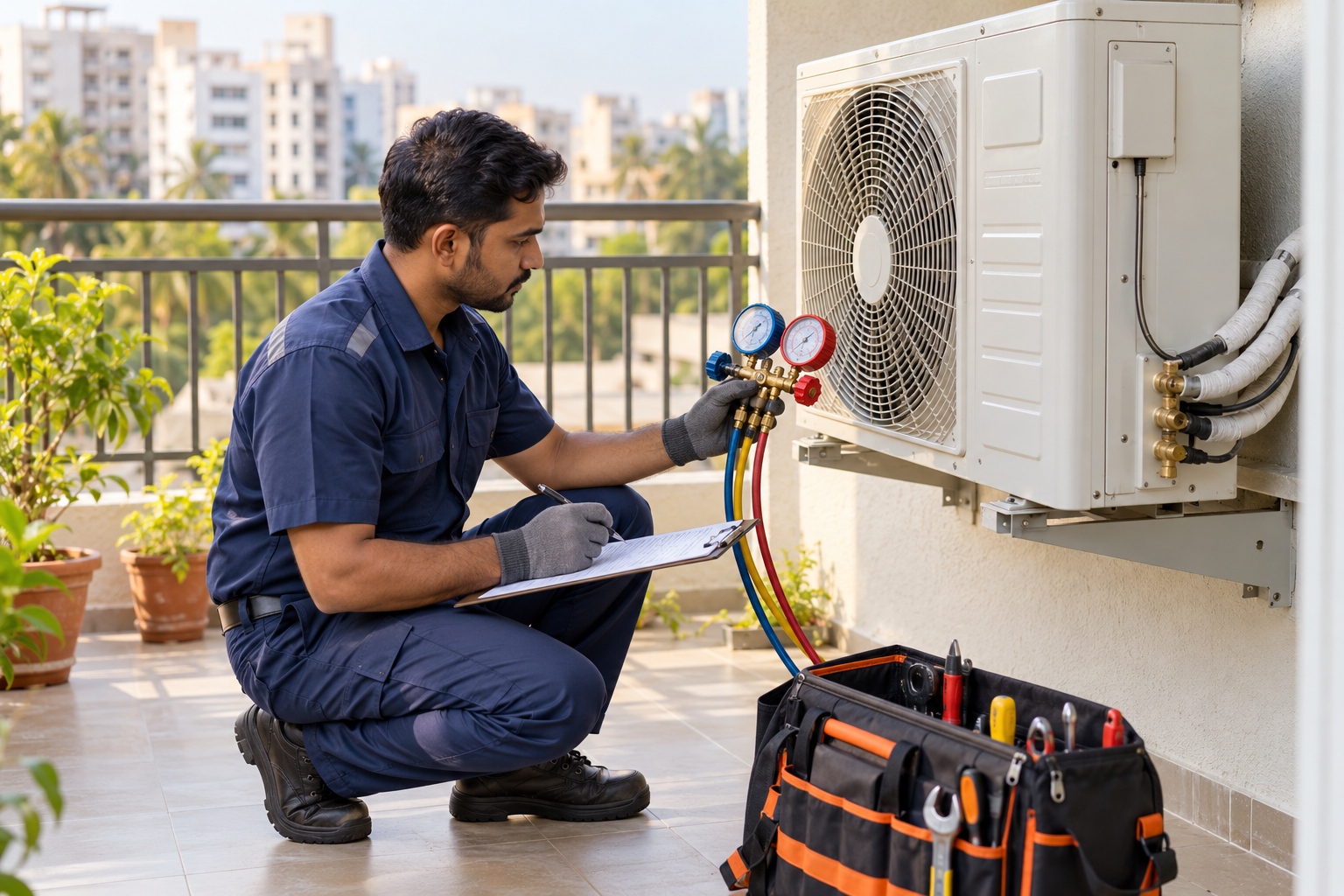
Service packages vary, so it helps to ask what is actually included. A thoughtful maintenance visit is not just a quick spray-and-go. Depending on the model and its condition, it may involve a filter and coil inspection, cleaning where appropriate, condensate-drain checks, fan and blower assessment, electrical-connection inspection, and performance testing.
Refrigerant is not a routine top-up
If a system needs refrigerant, it is important to find out why. Refrigerant circulates in a sealed system; a low charge may indicate a leak. Ask the technician to locate and repair the cause instead of repeatedly adding refrigerant. This protects the equipment and avoids treating a symptom as a permanent solution.
Likewise, an experienced technician should be comfortable explaining the problem in plain language: what they found, what needs immediate attention, what can wait, and whether replacement parts are required. Keep the invoice and service notes. They make future decisions easier, particularly if the same issue returns.
When Repair Makes Sense—and When to Consider Replacement
Many faults are repairable. A blocked drain, dirty coil, worn capacitor, damaged fan component, or control issue does not automatically mean the end of an AC. However, repeated major repairs, persistent cooling issues, or a system that is old and inefficient can change the calculation.
Before replacing a unit, ask for a diagnosis and an estimate that separates immediate repair from longer-term options. Consider the age of the AC, its service history, the availability of parts, the condition of the installation, and how well the current capacity suits the room. An oversized or undersized system can be uncomfortable and inefficient even when it is new.
AC Repair and Maintenance Routine for Every Season
- Monthly in peak season: inspect filters and observe airflow, noise, and drainage.
- Before summer: book preventive servicing before schedules become crowded.
- After storms or long downtime: look for visible damage around the outdoor unit and unusual operation when restarting.
- Any time something changes: record what you notice—when it started, any error display, sounds, smells, leaks, and changes in cooling.
The Bottom Line
Reliable cooling is rarely about one dramatic repair. It comes from clean filters, sensible use, unobstructed airflow, and professional attention before minor issues grow. Treat your AC as a working system rather than a switch on the wall, and it is more likely to be ready when summer is at its toughest.
For professional support, visit LARC Media’s AC repair and maintenance services.
10 Future Blog Topics
- Why Is My Split AC Leaking Water Indoors?
- How Often Should You Service an AC in India?
- AC Not Cooling: A Homeowner’s Troubleshooting Checklist
- How to Clean Split AC Filters Safely
- What Causes Bad Smells from an Air Conditioner?
- AC Repair vs Replacement: How to Decide
- How to Reduce AC Electricity Use Without Sacrificing Comfort
- Common Outdoor AC Unit Problems and What They Mean
- What Happens During a Professional AC Service?
- How to Choose the Right AC Capacity for Your Room