
Discover how to reduce your AC electricity bill with smarter temperature settings, better airflow, regular maintenance and practical ways to keep your home comfortable during hot weather.
Learning how to reduce your AC electricity bill can help you manage household expenses without giving up indoor comfort. During hot weather, an air conditioner may run for several hours a day. Its electricity consumption depends on outdoor temperature, room insulation, appliance efficiency, cooling demand and daily usage.
You do not necessarily need to stop using your AC. Small changes to your routine, together with appropriate maintenance, can help your air conditioner operate more effectively. Actual savings vary according to the appliance and the conditions in which it operates.
In this guide, we explain ten practical ways to lower AC energy consumption, identify common mistakes and understand when professional servicing may help.
1. Choose a Comfortable AC Temperature Setting
One of the simplest ways to manage AC electricity consumption is to choose a sensible thermostat setting. Setting the temperature much lower than necessary does not automatically make a room cool faster and may increase the cooling demand.
Start with a comfortable setting and adjust it according to your needs. A moderate setting, often around 24°C as a starting point, may help avoid unnecessary cooling demand. Comfort and energy use vary with humidity, occupancy and room conditions.
2. Keep Doors and Windows Closed While Cooling
Open doors and windows can allow cooled indoor air to escape while warm outside air enters. This creates additional work for the air conditioner.
Close windows and external doors while the AC is operating. Check for obvious gaps around doors and windows, and use suitable weather seals where practical. Maintain appropriate ventilation for indoor air quality.
3. Clean the AC Air Filter Regularly
A dirty air filter can restrict airflow through the indoor unit. When less air passes through the system, cooling performance may suffer and the AC may take longer to make the room comfortable.
Check the filter according to the manufacturer’s instructions. In dusty environments or homes where the AC runs frequently, it may need attention more often. Follow the appliance instructions before accessing a filter.

Cleaning a filter will not fix every cooling problem. If the AC still performs poorly, the indoor coil, blower, outdoor unit or another component may need inspection.
4. Keep the Outdoor AC Unit Clear
The outdoor unit releases heat removed from your room. It needs adequate airflow to do this effectively. Leaves, dust, stored objects and unsuitable covers can obstruct the area around the unit.
Keep the surrounding area clear and follow the manufacturer’s installation clearances. If the condenser is heavily soiled, arrange suitable cleaning rather than opening or dismantling the unit yourself.
5. Use Curtains and Blinds to Reduce Heat Gain
Direct sunlight can heat rooms through windows, particularly during the afternoon. As indoor temperature rises, the AC has more heat to remove.
Close curtains or blinds during periods of strong sunlight. Suitable window shading can be especially helpful in rooms with large windows or significant afternoon sun exposure.
6. Schedule AC Servicing When Needed
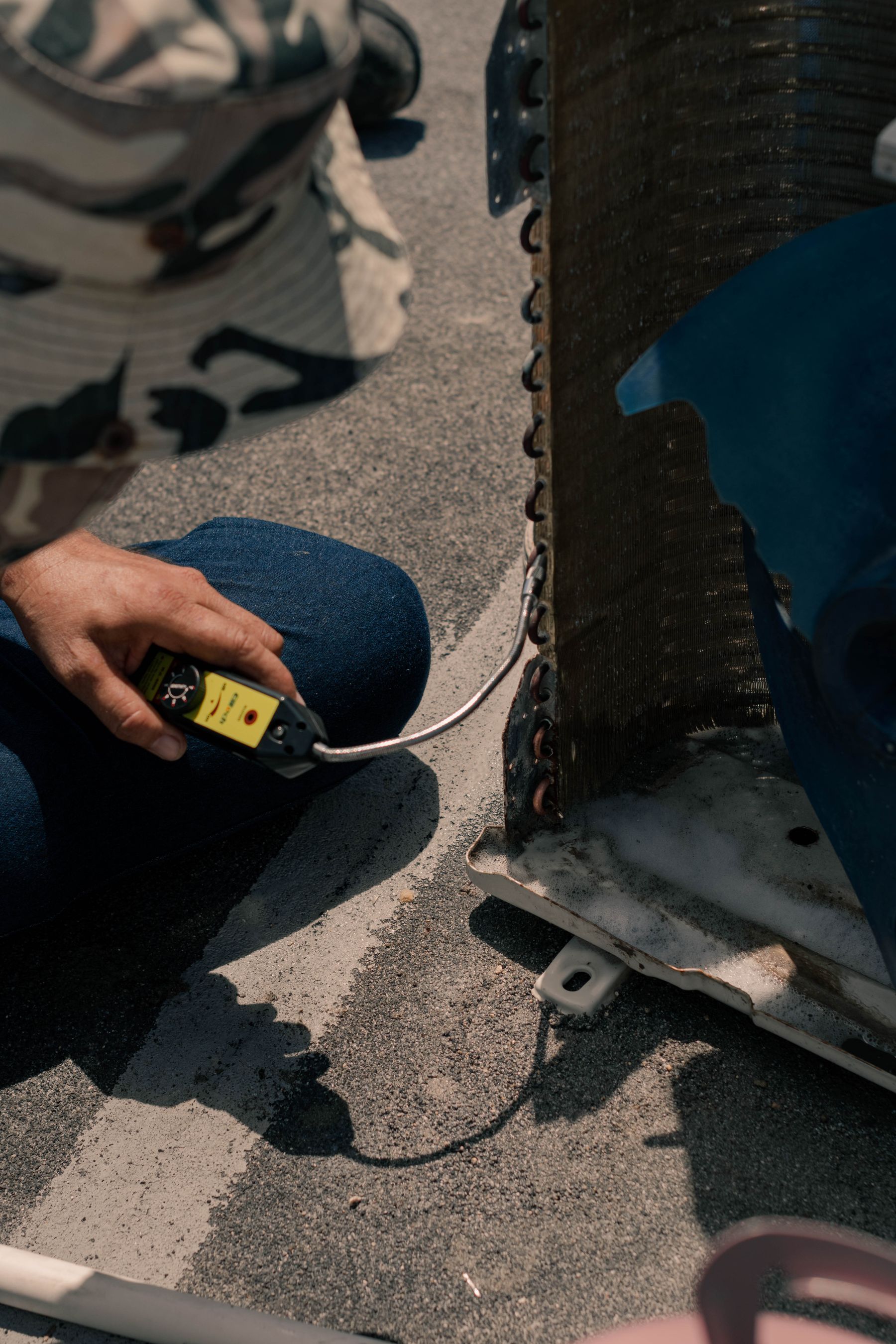
Regular maintenance is an important part of managing AC electricity consumption. Dust accumulation, restricted airflow, dirty coils and developing mechanical issues can affect how well the system cools.
Depending on the AC and its condition, maintenance may include checking filters, coils, drainage, airflow, electrical connections and the outdoor unit. Follow the manufacturer’s maintenance recommendations.

Do not assume that every electricity-bill increase means the AC needs refrigerant. A technician should investigate the symptoms before recommending repairs.
If your AC needs professional attention, explore our AC service areas in Hyderabad to check the locations we cover. You can also contact LARC AC Repair to enquire about servicing.
Explore More AC Services in Hyderabad
Need help maintaining your air conditioner? Explore our AC service areas in Hyderabad to see where our services are available.
If your AC is not cooling properly, visit the LARC AC Repair website to learn more about our services.
Have questions about your AC’s performance or maintenance? Contact LARC AC Repair to enquire about service.
7. Investigate Cooling Problems Early
If the AC takes noticeably longer than usual to cool the room, avoid repeatedly lowering the thermostat in the hope that this will solve the problem. The cause could be restricted airflow, dirty coils, extreme outdoor conditions, incorrect settings or a technical fault.
Pay attention to weak airflow, unusual noises, ice formation, water leakage, error codes or repeated power trips. These symptoms can have different causes and should be assessed appropriately.
If basic checks do not resolve the issue, learn more about AC repair assistance and explain the symptoms to a technician.
8. Choose the Right AC Capacity for Your Room
AC capacity should match the cooling load of the room. An undersized unit may struggle during hot weather, while an oversized unit may provide less effective humidity control in some circumstances.
Room area is not the only factor. Ceiling height, window size, sunlight, insulation, occupancy and heat-producing equipment also influence the cooling requirement.
When replacing an appliance, request a capacity assessment based on actual room conditions rather than choosing an AC solely by price or floor area.
9. Compare Energy-Efficient AC Models
If you plan to replace your air conditioner, compare the applicable Bureau of Energy Efficiency (BEE) label information for the models you are considering. Star labels help consumers compare appliance energy performance under the applicable rating framework.
Check rated annual energy consumption, cooling capacity and the applicable label period. Compare like-for-like models wherever possible. Actual running costs depend on the appliance, operating hours, weather and usage.
To compare appliance energy labels, visit the official Bureau of Energy Efficiency (BEE) star-labelled appliances information . Check the applicable label details before purchasing a new air conditioner.
10. Pay Attention to AC Installation Quality
Installation quality affects the way an air conditioner operates. Incorrect positioning, restricted outdoor airflow, unsuitable pipework, poor drainage or improper electrical connections can cause problems that thermostat changes will not solve.
Follow the manufacturer’s installation requirements and use a qualified installer. Refrigerant-line work, pressure checks, electrical connections and commissioning should be completed using appropriate procedures.
Quick Comparison: Habits That May Help Reduce AC Energy Use
| Action | Why it matters | What to do |
|---|---|---|
| Moderate temperature setting | May reduce unnecessary cooling demand | Choose a comfortable setting |
| Clean air filter | Helps maintain airflow | Inspect and clean as recommended |
| Window shading | Can reduce solar heat entering the room | Use curtains or blinds during strong sun |
| Clear outdoor unit | Supports airflow around the condenser | Remove nearby obstructions safely |
| Timely maintenance | Helps identify performance issues | Follow service recommendations |
| Efficient replacement model | May reduce energy use for comparable cooling | Compare current BEE label data |
How to Check Whether Your AC Electricity Bill Is Improving
Avoid judging energy savings from a single day’s bill. Weather, operating hours, occupancy and other household appliances can change electricity consumption significantly.
If your electricity provider offers consumption data, compare similar periods while accounting for differences in weather and usage. Record operating habits and changes you make to understand the results more clearly.
Frequently Asked Questions About Reducing AC Electricity Bills
What is the best temperature to set an AC at?
Choose a comfortable temperature for the occupants and room conditions. Around 24°C can be a starting point, but comfort and energy use vary.
Does cleaning the AC filter reduce electricity consumption?
A clean filter helps maintain airflow. If a dirty filter restricts airflow, cleaning it may improve operation. Savings depend on the system’s condition.
Does an AC use more electricity during extreme heat?
It can. High outdoor temperatures and increased indoor heat gain may make cooling more demanding and extend operating time.
Can AC servicing lower my electricity bill?
Maintenance may improve performance when restricted airflow or dirty components affect operation. Servicing does not guarantee a fixed percentage of savings.
Is a 5-star AC always cheaper to operate?
Star ratings help compare energy performance within the applicable labeling framework. Actual running costs also depend on capacity, operating hours, weather, settings and appliance condition.
Why is my AC electricity bill suddenly higher?
Possible reasons include longer operating hours, hotter weather, changed thermostat settings, restricted airflow or other changes in household electricity use. Investigate unusual cooling problems early.
Final Thoughts: Reduce AC Electricity Consumption Wisely
The most practical way to manage AC electricity consumption is to combine sensible temperature settings, closed doors and windows, clean filters, suitable shading and regular attention to the system’s condition. Choosing an appropriately sized, energy-efficient AC can also matter when buying a new appliance.
There is no single setting or maintenance task that guarantees a fixed percentage of savings. Results depend on the equipment, climate, room and daily usage. Start with simple checks, monitor consumption and investigate unusual cooling problems early.
Need Help With Your AC?
If your AC is consuming more energy than expected, cooling poorly or showing signs of a fault, contact LARC AC Repair in Hyderabad for service guidance.
Call: 86888 40509 WhatsApp LARC